How to Choose the Right Fencing for Your Property
A fence is one of the few things on your property that has to work every day and look good doing it. It holds the boundary. It keeps kids and dogs in. It keeps wind, noise and eyes out. And it is the first thing people see when they pull up.
Get it right and you stop thinking about it. Get it wrong and you are pulling posts out of the ground in five years.
Here is how to choose fencing that suits your place, your budget and the way you actually live.
Start with the job the fence has to do
Before you look at a single photo, get clear on what the fence is for. Most fences do more than one job, but one usually leads.
- You want to sit outside without the neighbours in the picture. Solid panels, minimal gaps.
- You want a boundary that is hard to get over or through. Height, strength and a proper gate matter more than looks.
- Pool safety. This one is not a preference. It is law, and the rules are specific.
- A tidy line that marks where your place ends and the neighbour’s begins.
- Kerb appeal. The front fence sets the tone for the whole property.
- Wind and noise. A solid fence on the windward side changes how usable your outdoor area actually is.
Write the top two down. Every decision after this gets easier.
Read your site before you pick a style
The same fence performs very differently in Merivale and in New Brighton. Your site decides more than your taste does.
Wind
Canterbury nor’westers build through spring, and an easterly off the coast loads a fence differently again. High wind zones need heavier posts and deeper footings. That is not an upgrade. It is a requirement.
Salt
Near the coast, on either side of the country, salt spray finds any weak coating. Coastal Christchurch and much of Auckland both count. Choose the finish for the site, not the showroom.
Slope
Sections that fall away need either raked panels that follow the ground or stepped panels that stay level. Decide which look you want early, because it changes the panel order and the post layout.
Ground
Post footings are only as good as what they sit in. Soft or reworked ground needs bigger footings. Across parts of Christchurch that is still worth checking properly.
Sun and shade
Timber on a shaded boundary that never fully dries out is a maintenance job waiting to happen. Pick a material that matches the conditions.
The materials, compared honestly
We are authorised distribution agents for Urban Group and Edgesmith, and we supply and install their full range across Auckland and Christchurch. Here is how the options actually stack up.
Aluminium
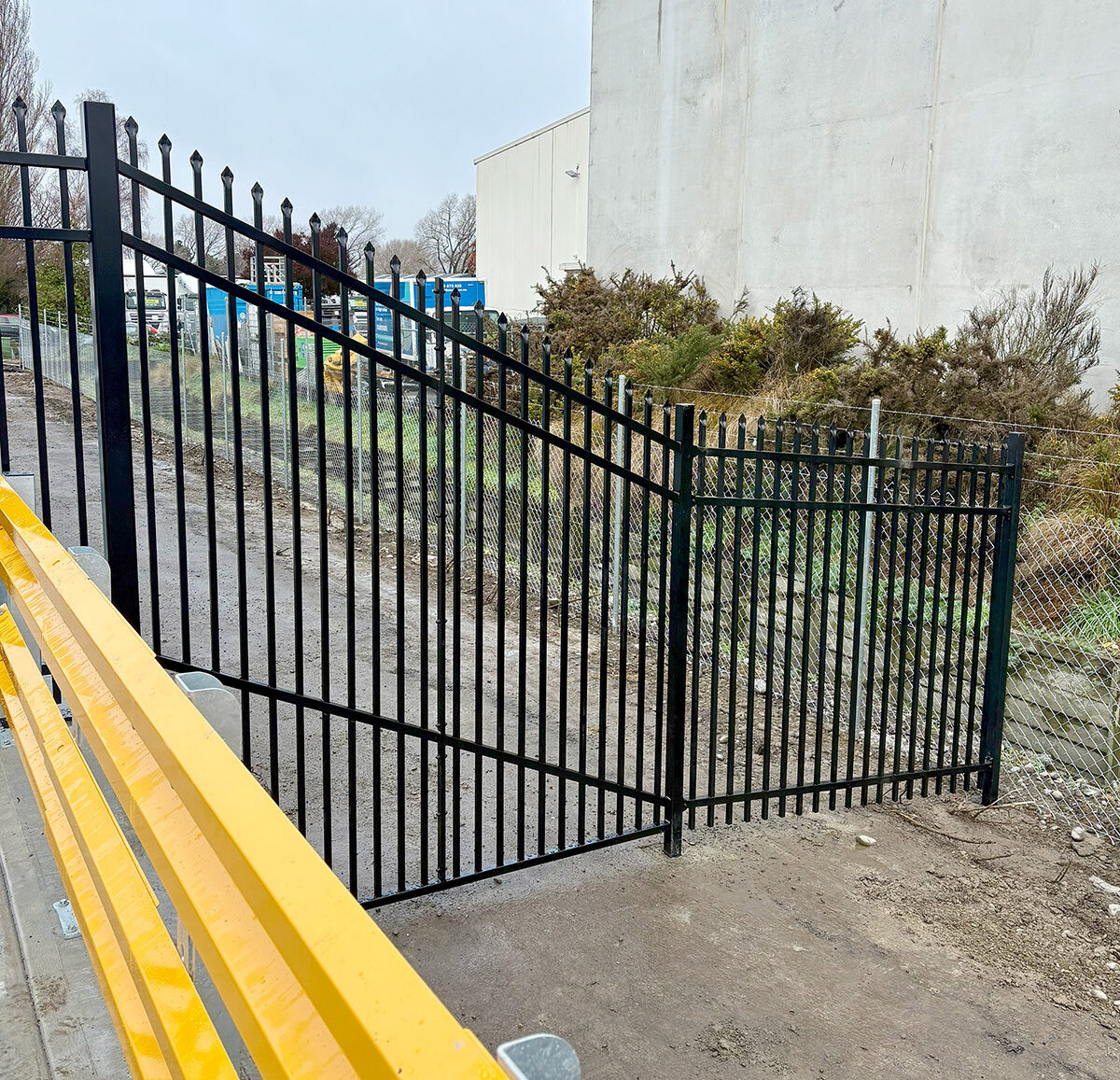
Light, will not rust, and holds a powder coat finish well. It suits slat and batten looks, pool surrounds and anywhere you want a clean modern line. The range includes the Urban Group Assure, Assure HD, Fresno, Maximus, Paladin, Premier and Secura profiles, plus the Edgesmith Oasis, Straits, Mercury, Verve, Nicks and Finns panels.
- Best for: coastal sites, modern homes, pool areas, matched fence and gate runs.
- Worth knowing: aluminium sits at the higher end per metre. You are paying for a finish that stays put.
StabiFence
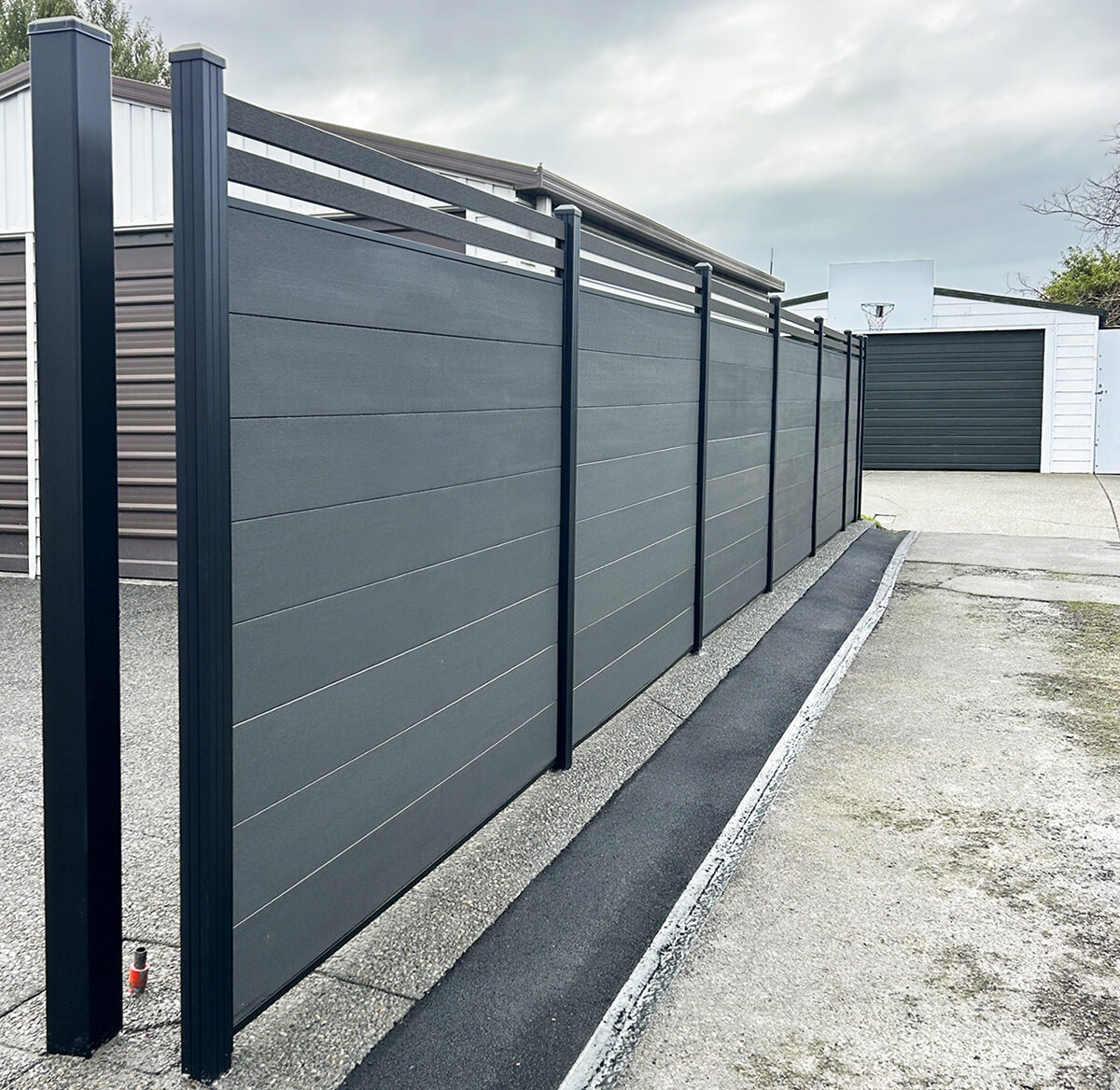
A panel system made from 90 percent recycled material. It gives you the look of timber without the splitting, fading and repainting. Available up to 2000mm high in solid, slat top and full slat panels.
- Best for: privacy boundaries where you want warmth without the upkeep.
- Worth knowing: it is effectively maintenance free, which is the whole point of it.
ColourFence
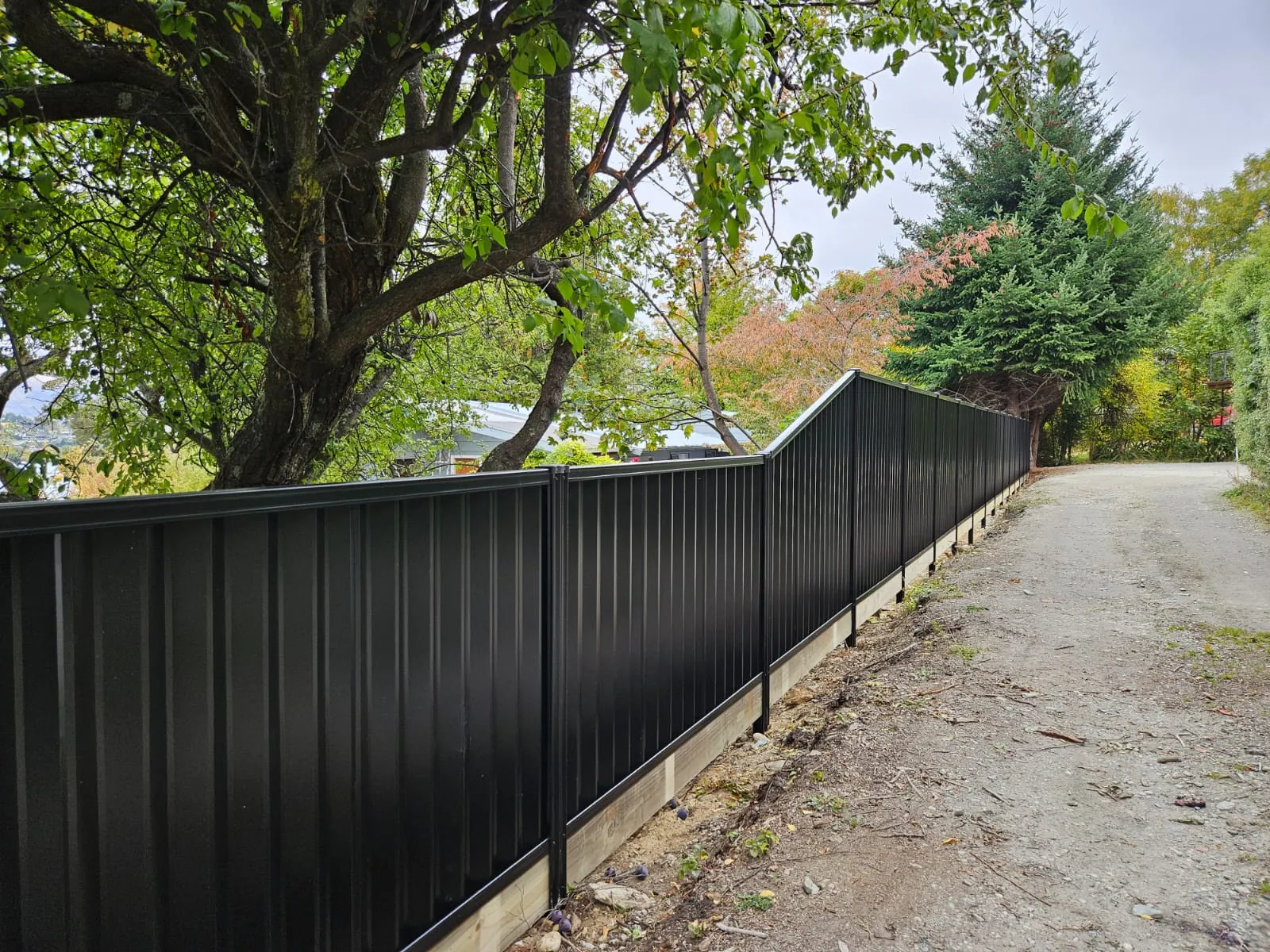
ColourFence is Roll formed galvanised steel with a COLORBOND finish and a 10 year colour warranty. It will not rot, splinter, warp or twist. Satin black and gunmetal grey are stock colours, in 1200mm and 1800mm panel heights, with posts available up to 2700mm. High wind zones use reinforced steel posts. It is also pool and balustrade compliant.
- Best for: long boundary runs, exposed sites, and anyone who does not want to touch a fence again.
- Worth knowing: panels can be raked to follow a slope, and the profile reads the same from both sides. Your neighbour gets the good side too, which makes the boundary conversation a lot easier.
Timber
Still the most affordable way to cover a long boundary, and still the right answer on some character streets.
- Best for: budget-led boundary runs and older homes where the look needs to fit the street.
- Worth knowing: timber moves. Budget for staining or oiling, and expect to replace palings over time.
The rules to check before you order
This is where fencing jobs go sideways. None of it is complicated, but all of it is far easier to sort before the panels arrive.
Building consent
You need a building consent for any fence over 2.5m, measured from the top of the fence to the ground directly below it. Under that height, most standard fences are exempt.
Christchurch District Plan
In residential zones the general limits are 1.8m on a road boundary and 2m on side and rear boundaries. Lower or more transparent designs are required in Character Area Overlays, the Residential New Neighbourhood Zone, medium and high density residential zones, and where your boundary adjoins a public park. If you are not sure which applies to your section, ring the Council duty planner before you order.
Auckland Unitary Plan
Auckland works by zone, and front yard limits are usually lower than side and rear. Special Character Areas and heritage overlays add more on top. Check your property on Auckland Council’s property tools before you commit to a height.
Pool fencing
Residential pool barriers sit under Building Code clause F9 and the Building (Pools) Amendment Act 2016. The barrier has to restrict unsupervised access by young children, gates included, and the technical detail sits in F9/AS1 and NZS 8500:2006. Residential pools must be inspected every three years by the council or an independently qualified pool inspector. This is not a place to guess.
Your neighbour
Boundary fences fall under the Fencing Act 1978. The default is that you and your neighbour split the cost of an adequate fence 50/50. To start it properly you serve a fencing notice setting out the boundary, the type of fence, the estimated cost and the start date. Your neighbour has 21 days to object with a cross notice. If they say nothing in that time, they have accepted. If you want something better than adequate, you cover the difference.
Serve the notice, keep a copy, and the whole thing usually stays friendly.
If a gate is part of it, plan it now
This is the part people leave until last, and it is the part that costs the most to fix.
An automated gate needs power, ducting and the right post spacing. If your driveway is going to be concreted or paved, the conduit has to go in before that happens. Retrofitting a power run under a finished driveway is expensive and messy.
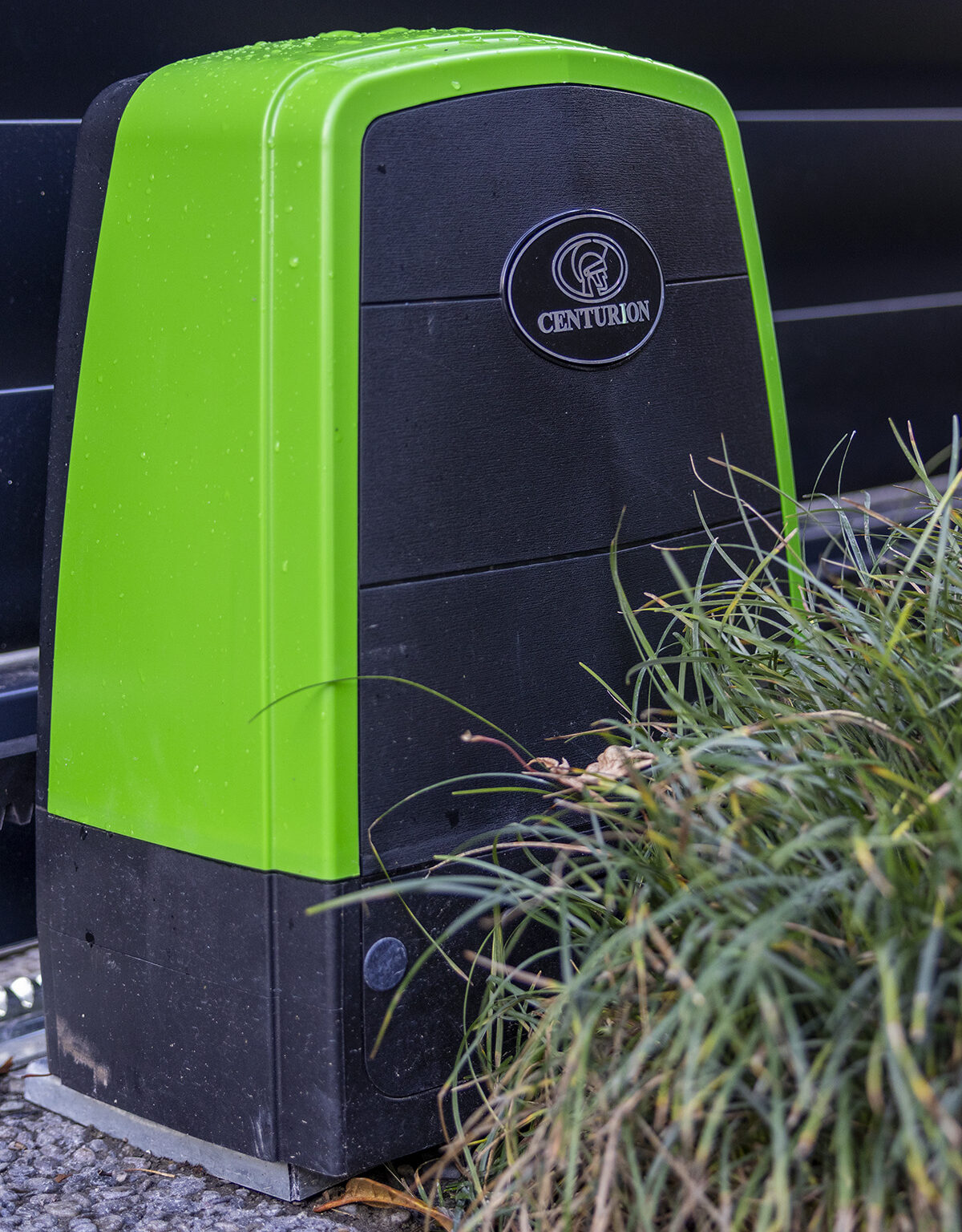
We install Centurion gate automation, including the D5 and D10 sliding gate motors and the V500 linear swing gate motor, with smartphone control if you want it.
A few things to settle early:
- Sliding or swing. Sliding needs a clear run alongside the opening. Swing needs room to open and a reasonably level approach.
- Where the gate sits relative to the road. You want space to pull off the street safely while it opens.
- Whether the gate matches the fence or deliberately contrasts. Both work. Decide on purpose.
- How you open it. Intercom, keypad, remote or phone.
Because we do fencing, gates and automation, the whole run gets designed as one. That is the difference between a gate that looks like it was always meant to be there and one that looks bolted on.
Where to spend, and where not to
- Spend on posts and footings. Everything else hangs off them.
- Spend on gate hardware. Hinges and rollers do the work, and the cheap ones fail first.
- Spend on the finish if you are anywhere near the coast.
- Do not overspend on height you are not allowed to build.
- Do not put a premium panel on a boundary nobody sees. Put that money into the street-facing run.
A quick checklist before you get quotes
- What are the top two jobs this fence has to do?
- How long is the run, in metres?
- What height do you want, and does it comply with your council’s rules?
- Is a gate involved, and does it need to be automated?
- Is the ground level, sloping or stepped?
- Is it a boundary fence, and have you spoken to the neighbour?
- Is there a pool anywhere near it?
Bring those answers to a quote and you will get a straight number instead of a range.
Get a measure and a straight quote
We supply and install fencing across Christchurch and Auckland. Aluminium, StabiFence, ColourFence and timber gates, with Centurion automation when you want the gate to do the work for you.
Book a free measure and quote, or come and see the range in person.
Christchurch: 295 Cranford Street, St Albans. 03 352 8005.
Auckland: 67A Allens Road. 09 274 2220.
Tell us what the fence has to do. We will tell you what it needs, what it costs, and when we can have it in.
Book a free measure and quote now