The Top 5 Low Maintenance Garage Doors for NZ Homes (And One That Isn’t)
Winter’s given your house a fair hiding. Salt off the coast, hard frosts on the Canterbury Plains, and months of damp sitting on every outside surface you own.
Your garage door copped most of it. On a lot of New Zealand homes it’s the biggest single surface facing the street. It’s also the one nobody thinks about until it looks tired or stops running properly.
Here’s the thing. Some garage doors ask a lot of you. Others ask almost nothing. The difference comes down to three things: the material, the coating, and the hardware behind it. Get those right at the start and you buy yourself years of not thinking about it.
Below are the five best low maintenance garage doors we install across Auckland and Christchurch, and the honest reason each one is on the list.
Where low maintenance actually comes from
Most people choose on colour and panel style. Fair enough. Those decide how your place looks. They do not decide how much work the door creates. A low maintenance garage door is built that way. You do not get there off a colour chart.
Three things do:
- The skin. What the door face is made of and what’s baked onto it. This decides whether you’re washing it or sanding it.
- The moving parts. Springs, rollers, tracks, hinges, cables. Every door has them. Better parts and fewer of them means fewer callouts.
- Your exposure. Salt is the biggest driver of upkeep in this country. A door two streets back from the beach lives a different life to one facing it.
One more thing worth asking about: the warranty on the coating, not on the door. A long coating warranty means the manufacturer expects the finish to hold up. A short one tells you something as well.
No door is truly maintenance free, whatever anyone tells you. What we’re talking about is a wash a few times a year instead of a weekend with a sander.
1. COLORSTEEL sectional door
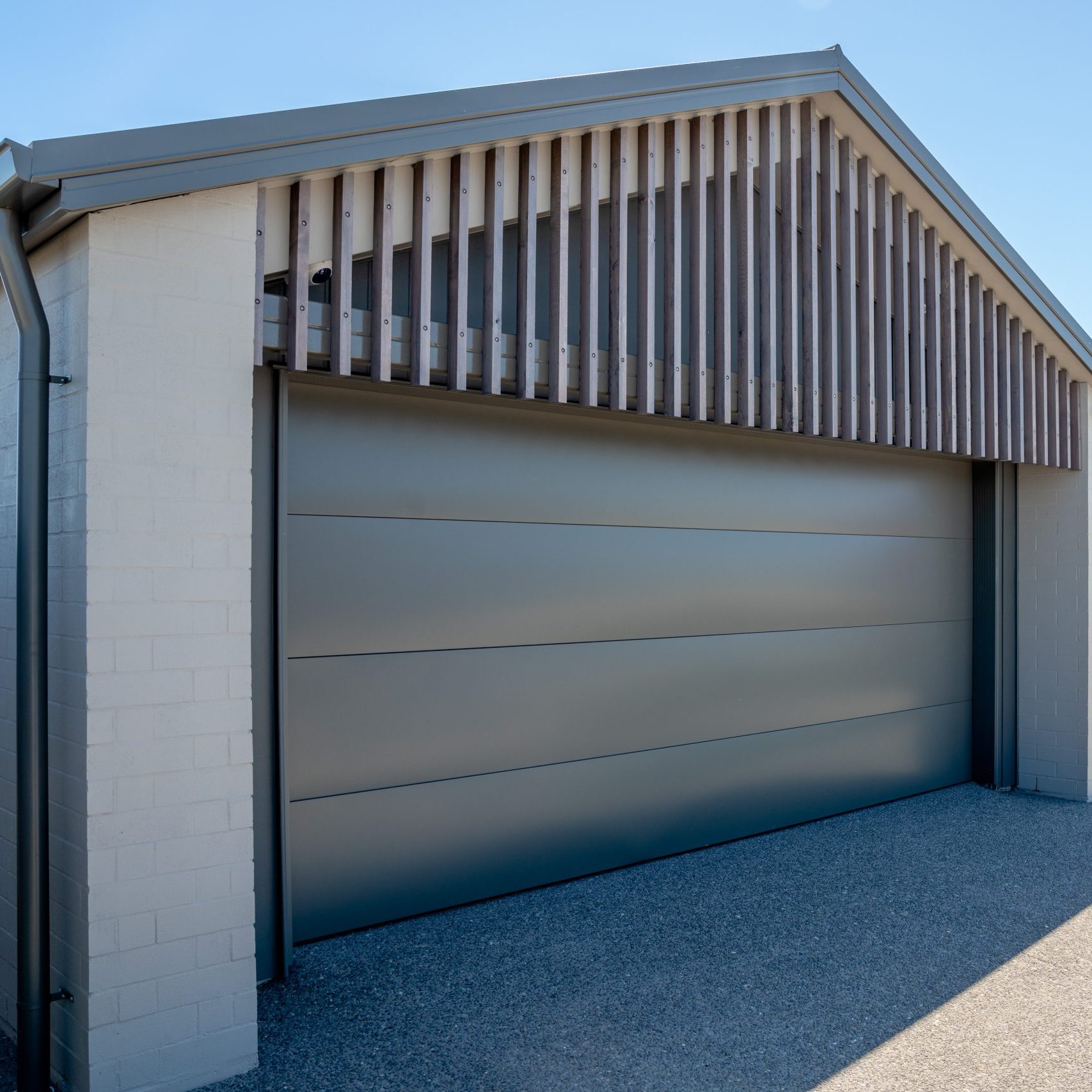
If we had to pick one low maintenance garage door for the average New Zealand home, this is it.
COLORSTEEL is pre-painted steel made by New Zealand Steel for our conditions. The paint system is baked on at the mill, not applied afterwards, so the colour is part of the panel rather than a coat sitting on top of it.
A sectional door lifts up and back into the garage roof space. The door face never scrapes past anything.
Why it’s low maintenance:
- Warm water, mild detergent, soft brush. That’s the routine.
- The factory coating is backed by warranty, provided you keep to the wash schedule for your environment.
- Woodgrain and smooth finishes both hold their colour, including the charcoals and blacks people are asking for now.
- Panels are replaceable one at a time. Reverse into the bottom section and you’re not buying a whole new door.
Best for: most suburban homes in both cities.
Worth knowing: if you’re close to the water, step up the COLORSTEEL grade rather than taking the standard one. We’ll tell you which grade suits your street.
2. Aluminium composite sectional door
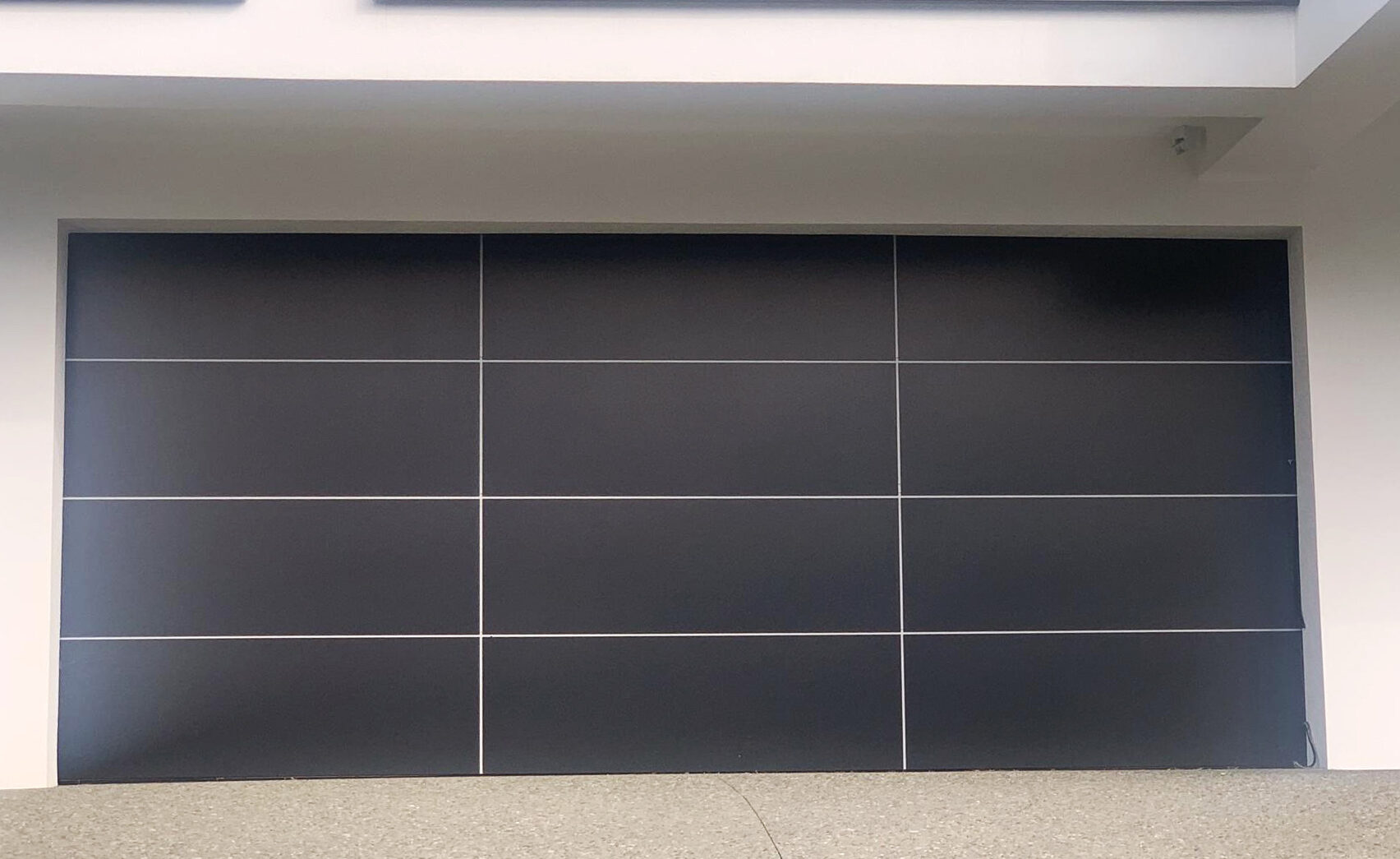
This is the low maintenance garage door for people who want a flush, architectural look and refuse to spend weekends on upkeep.
Aluminium composite panels are an aluminium skin over a solid core, powder coated in your choice of colour. Aluminium doesn’t rust. That one fact does a lot of work when you live near the sea.
Why it’s low maintenance:
- No rust risk in the panel, which is why it’s our first suggestion for coastal builds.
- Powder coated finishes handle UV well, and both cities dish out plenty of it over summer.
- Flat, clean lines. Fewer grooves and lips for grime to collect in.
- Lighter than steel at the same size, so it’s easier on the springs and the opener.
Best for: coastal sites and new builds where the architect has specified a flush frontage.
Worth knowing: it sits above a standard steel door on price. You’re paying for corrosion resistance and the look. Near salt water, over 15 years, most owners find that pays for itself.
3. COLORSTEEL roller door
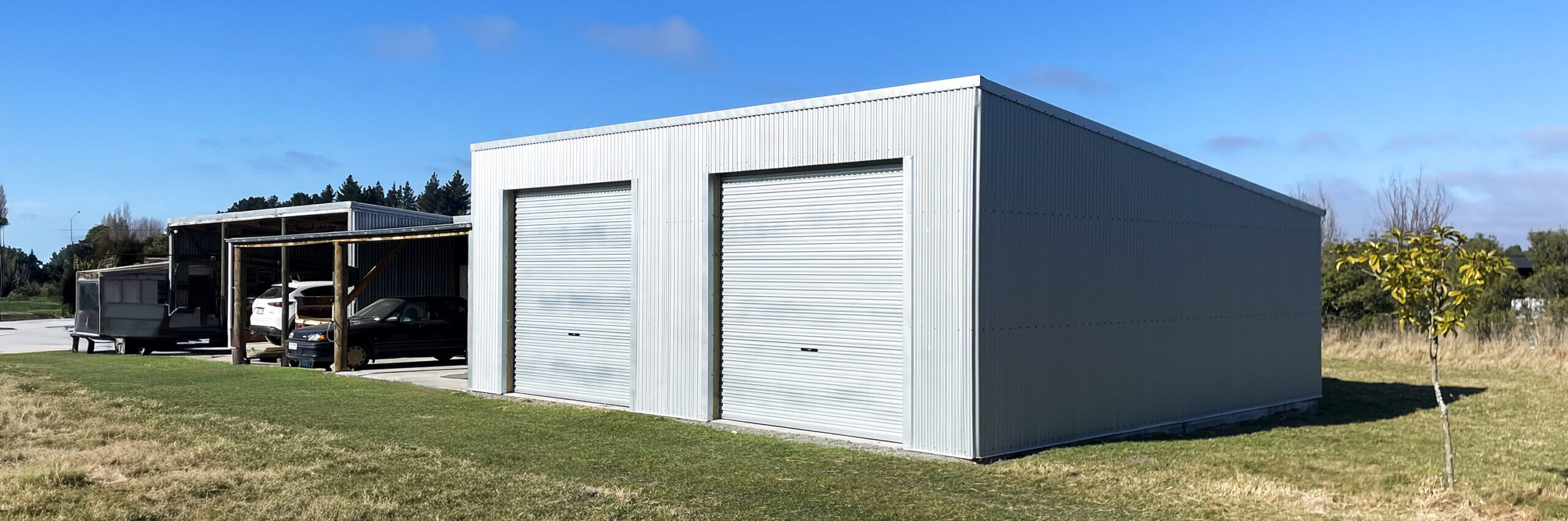
The roller door’s greatest strength is simplicity.
One continuous steel curtain that rolls onto a barrel above the opening. No panels, no hinges between sections, no horizontal tracks running back into the garage.
Why it’s low maintenance:
- Fewer moving parts than any other door type. Fewer parts, fewer things to fail.
- No overhead tracks, so the garage ceiling stays clear for storage.
- Cleaning is one flat surface and a hose.
- Wind-rated versions are available. In Canterbury that’s worth a serious conversation, because the nor’wester doesn’t go easy on a garage door.
Best for: rear garages, sleepouts, workshops, rentals, and anywhere reliability matters more than styling.
Worth knowing: the curtain is thinner than a sectional panel, so it dents more easily. Keep the wheelbarrow away from it.
4. Aluminium slat roller door
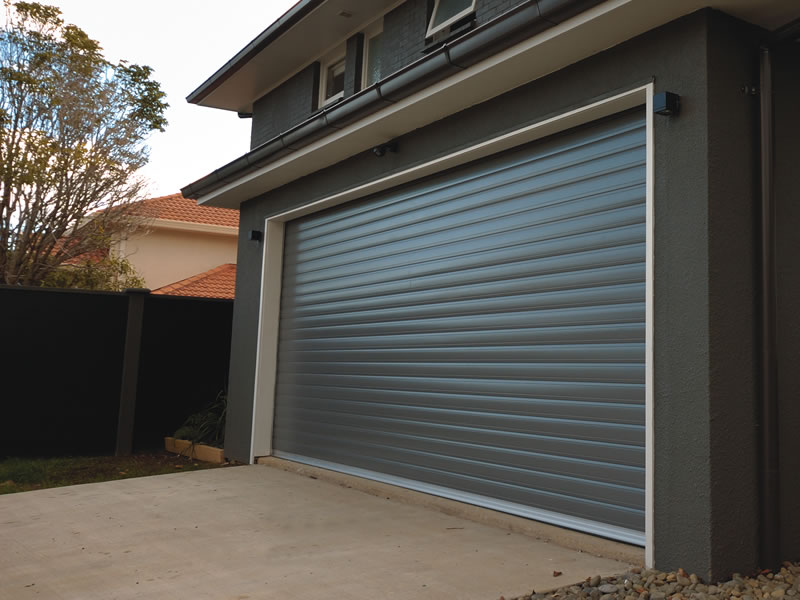
Take everything good about a roller door and remove the rust question.
Aluminium slat roller doors use interlocking extruded slats instead of rolled steel. They’re powder coated and they’re genuinely tough in a marine environment.
Why it’s low maintenance:
- Aluminium doesn’t corrode the way steel does when the coating gets nicked.
- Slats are individually replaceable. Damage becomes a repair, not a new door.
- Light to operate, which extends the life of the motor and the springs.
- Holds powder coat colour well in full sun.
Best for: beachfront homes and boat sheds. Anywhere salt spray actually lands on the building.
Worth knowing: aluminium is softer than steel. It handles salt better and knocks worse. Choose based on where you live.
5. Insulated sectional door
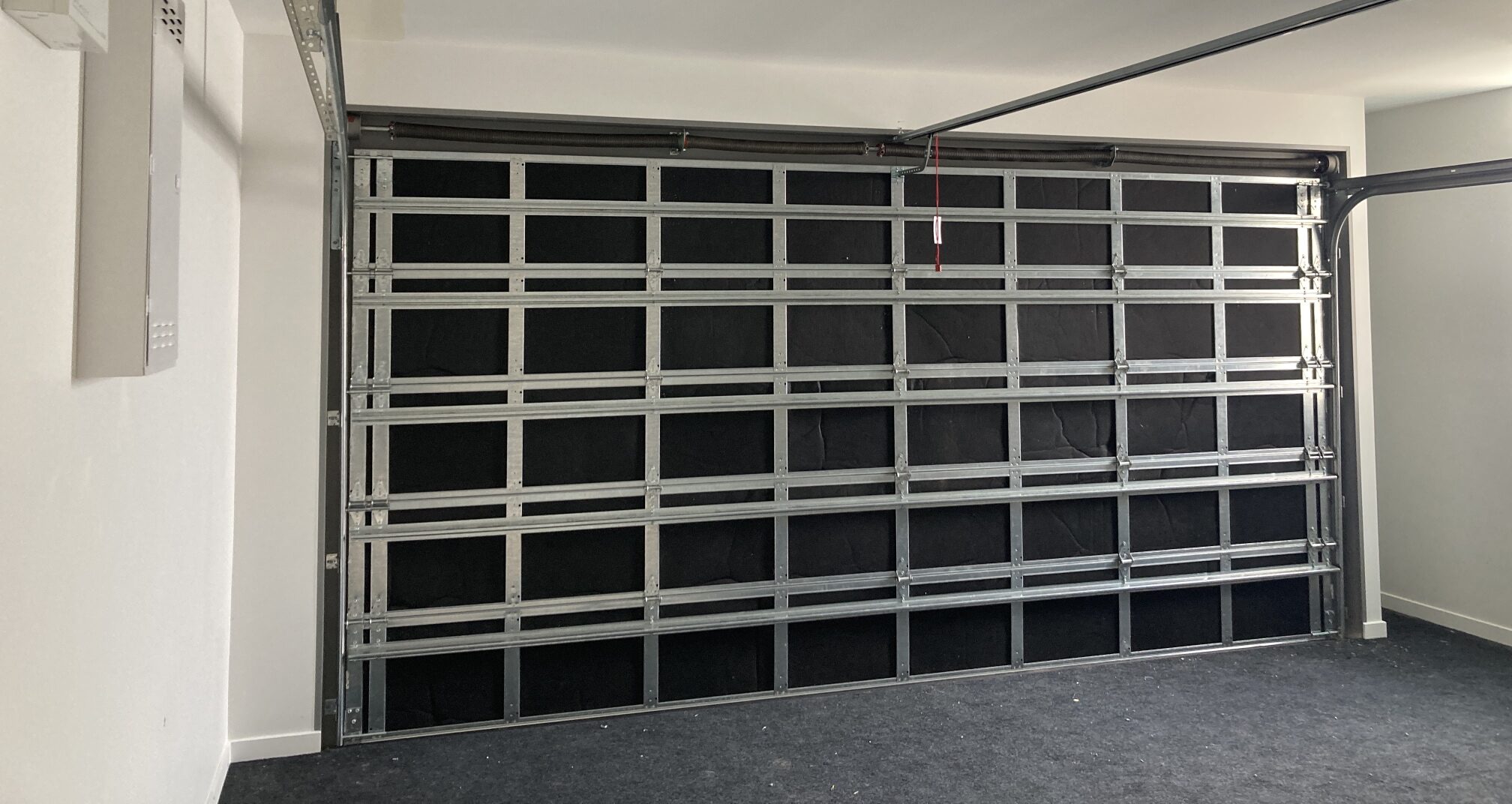
Insulation gets sold as a comfort upgrade. It’s a maintenance upgrade too, and that part gets missed.
An insulated sectional door is a foam core between two steel skins. In a Christchurch winter, the inside face of a single-skin door runs cold enough to pull condensation out of the air. Condensation sitting on steel week after week is how you end up with surface rust and a musty garage.
Why it’s low maintenance:
- The foam core keeps the inside face closer to room temperature, so far less condensation forms.
- Thicker panels are more rigid. They resist denting and they don’t stay bowed.
- Quieter running, which usually means the hardware is working less hard.
- Real benefit if the garage is attached, internally accessed, or converted into a room.
Best for: attached garages anywhere, and any Christchurch home that gets a proper frost.
Worth knowing: an insulated door weighs more. The spring set and the opener have to be matched to it. This isn’t a door to buy online and hang yourself.
The honest exception: cedar
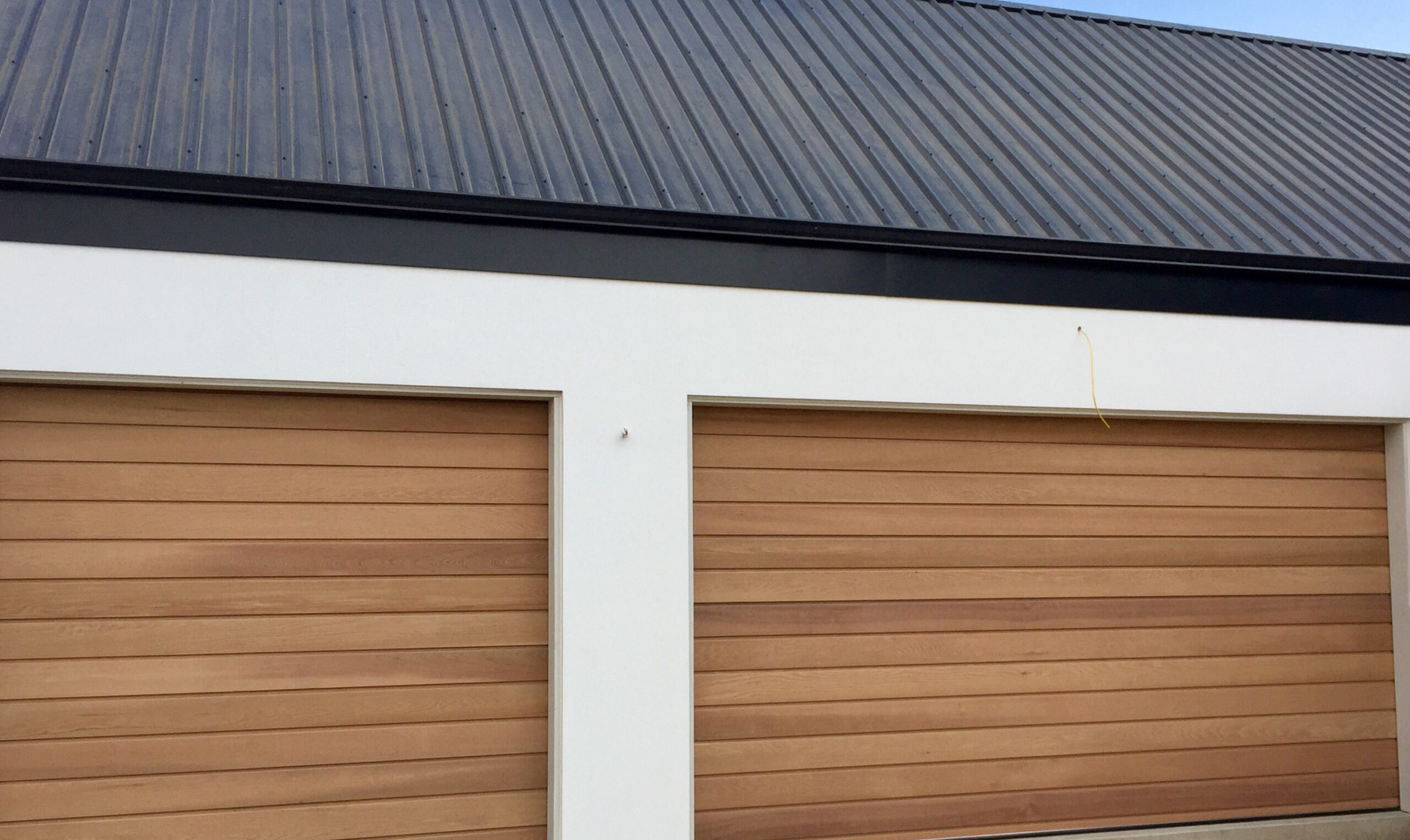
We supply cedar doors and they look superb. We will not pretend they belong on a list of low maintenance garage doors.
Timber moves. Oiled cedar needs recoating, and in a coastal or high UV spot that’s every couple of years to keep it looking like it did on day one. Let it go and it silvers off. Some people love that. Plenty don’t.
If you want the warmth of timber without the upkeep, an aluminium composite door in a woodgrain finish gets you most of the way there. See both in person before you decide. That’s what the showrooms are for.
What about fibreglass?
Fibreglass turns up on a lot of low maintenance lists, and on paper it earns its place. It doesn’t rust, it handles UV, and it never needs painting.
The catch is supply. Fibreglass garage doors are barely sold in New Zealand. That means a special order, a long lead time, and no local stock if a panel gets damaged in five years. You’d be relying on a shipping container to fix a dent.
Aluminium gives you the same corrosion resistance with a supply chain behind it. That’s why it’s on our list and fibreglass isn’t.
The bit everyone forgets: the hardware
You can pick the best panel on the market and still end up with a door that plays up. The skin is only half the story. Springs, cables, rollers and the opener do the actual work, and they wear whether the door is steel, aluminium or timber.
Two things make the difference here:
- Spring quality and cycle rating. A budget torsion spring is often rated to 10,000 cycles. A good one runs to 25,000 or more. On a family home opening the door four times a day, that’s the difference between new springs at seven years and new springs at 17.
- Matching the opener to the door. An opener that’s underpowered for the weight of the door works harder every cycle. It runs hot, it gets noisy, it fails early. Getting this right at install costs you nothing. Getting it wrong costs you a motor.
This is usually where the real price gap between a cheap door and a properly specified one sits. Not in the panel. In everything behind it.
Ask what cycle rating the springs carry and what the opener is rated to lift. Any installer worth using will have the answer straight away.
The 10 minute routine that keeps any door happy
Whatever you choose, this is all most doors ask for:
- Every three months, more often near the sea. Wash the outside with warm water, mild detergent and a soft brush. Rinse it properly. No solvents, nothing abrasive.
- Hit the spots rain misses. Underside of the top panel, the bottom rail, anywhere sheltered by a lintel. Salt builds up where rain never washes it off.
- Listen to it. New grinding, banging or squealing means something’s out of adjustment. Sort it early and it’s a service. Leave it and it’s a replacement.
- Keep the tracks clear. Leaves, cobwebs, grit. 30 seconds with a cloth.
- Book a service once a year for a busy family door. Springs and cables are under serious tension. Leave those to us.
So which one suits your place?
Short version:
- Standard suburban street: COLORSTEEL sectional.
- Near the water: aluminium composite sectional, or aluminium slat roller.
- Simple and reliable: COLORSTEEL roller door.
- Attached garage, cold winters: insulated sectional.
- You love timber and accept the upkeep: cedar, eyes open.
There is no single best low maintenance garage door. The right answer depends on your exposure, how the door gets used, and what the rest of the house looks like. That’s a five minute conversation, not a guessing game.
Common questions
What’s the lowest maintenance garage door for a coastal home?
Aluminium. Either an aluminium composite sectional door or an aluminium slat roller door. Aluminium doesn’t rust, so a nick in the coating near salt air doesn’t turn into a problem.
How often should I wash my garage door?
Every three months for most homes. Monthly if you’re close to the sea, or in a sheltered spot where rain never reaches the surface. Warm water, mild detergent, soft brush.
Are timber garage doors high maintenance?
Yes. Cedar needs recoating every couple of years in a coastal or high UV position. If you want the timber look without the upkeep, an aluminium composite door in a woodgrain finish is the closer option.
Do insulated garage doors need more looking after?
No, usually less. The foam core keeps the inside face warmer, so far less condensation sits on the steel through winter.
How long should a good garage door last?
Installed properly and washed regularly, 20 years or more on the door itself. Springs and cables are the wear items and get replaced along the way. That’s normal.
Book a free measure and quote
We’ve been installing low-maintenance garage doors across Auckland and Christchurch for more than 30 years. We know which doors last on which streets, because we go back and service them.
We’ll come to your place, look at your exposure, talk you through the options that suit it, and give you a straight quote. No allowances that blow out later. No runaround.
Auckland: 09 274 2220
Christchurch: 03 352 8005
Book a free measure and quote now
Or call into the showroom and put your hand on the doors before you decide. It’s the fastest way to work out what you actually want.